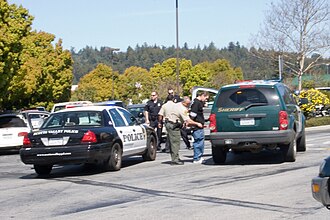
WSMV4 is a television station in Nashville, Tennessee. Their series entitled, “Sobering Problem” has exposed that since 2017, over 2,500 Tennessee drivers have been wrongfully arrested for driving under the influence of an intoxicant (DUI) when later chemical (primarily blood and/or breath) tests prove that the driver was, in fact, not under the influence of any intoxicant such as alcohol, prescribed medication, or illegal drugs. These mistakes are not simply an inconvenience for the driver; these mistakes ruin lives. People lose jobs, spend thousands of dollars defending themselves, and are burdened with an inappropriate reputation.
Oh, these needless arrests can be expunged (erased from public record of government agencies), but law-enforcement agencies will always show that the defendant was arrested, and the case dismissed. These law-enforcement records, often cause government employers who have access to these records to suspect that the defendant suffers from a substance abuse problem and will decline to employ them.
As important, there are many third-party companies which buy or otherwise have access to arrest records. Once posted online, these companies have no obligation to remove the arrest record, even if the case is later dismissed. Some, in fact, extort money from those whose cases are dismissed simply to forward the information to another sister company.
Make no mistake, there is no question that those who drive under the influence pose a dangerous threat to others. Tennessee tries to prevent this threat by strict enforcement and some of the harshest penalties in the United States. The question, however, is whether law-enforcement officials become overzealous.
Candidly, one cannot entirely blame the law-enforcement officers. They have limited tools. Tennessee officers though, for the most part, do not make use of tools that are readily available through recent technology and otherwise. For instance, the Tennessee Highway Patrol has not, for years, regularly used breath testing devices to determine if a driver has been consuming alcohol. Roadside breath testing devices are not particularly reliable for evidence purposes, but they could certainly indicate whether an officer’s alleged detection of the odor of alcohol, or some other substance that would not affect the ability of a person to drive normally is accurate. Drugged driving is yet another problem, but tests are available to quickly detect whether certain intoxicants have caused one to drive under the influence of drugs.
For over 40 years, this author has argued that while field sobriety tests are available as a tool to detect impairment or blood alcohol levels, they are not particularly reliable, nor are they sufficiently standardized in practice due in part of the failure of the officers to administer field sobriety tests in the standardized manner as they were trained. Additional problems are created when injuries, muscle fatigue, age-related atrophy, weight-related issues, and other inherent problems make field sobriety testing totally unreliable.
Accordingly, it is quite refreshing to see that not only has a news agency investigated this major problem, but they have continued their investigation for years. Significant changes have come about as a result of WSMV4-TV reporting. Charts and video clips of this WSMV4-TV reporting may be found by clicking here. For instance, due to these reports, in January 2026, the Tennessee Bureau of Investigation admitted to undercounting sober DUI arrests by thousands. Then, in April 2026, the Tennessee Highway Patrol decided to reinstate the use of breath testing devices after years of refusing to do so. It is interesting to note that use of breath testing devices is an important phase of the National Highway Traffic Safety Administration (NHTSA) Standardized Field Sobriety Tests. It is my sincere hope that law-enforcement agencies across the nation will spend greater resources on training and useful tools to limit the number of sober drivers wrongfully arrested.
About the Author: Steven Oberman has been licensed in Tennessee since 1980, and successfully defended over 2,500 DUI defendants. Steve was the first lawyer in Tennessee to be Board Certified as a DUI Defense Specialist by the National College for DUI Defense, Inc. (NCDD). Among the many honors bestowed upon him, Steve has served as Dean of the NCDD and currently serves as chair of the National Association of Criminal Defense Lawyers DUI Committee.
Steve is the author of DUI: The Crime & Consequences in Tennessee, updated annually since 1991 (Thomson-West), and co-author with Lawrence Taylor (1942 – 2023) of the national treatise, Drunk Driving Defense, 10th edition (Wolters Kluwer/Aspen). Steve has served as an adjunct professor at the University of Tennessee Law School since 1993 and has received a number of prestigious awards for his faculty contributions.
He is a popular international speaker, having spoken at legal seminars in 30 states, the District of Columbia and 12 foreign countries. After being named a Fulbright Scholar, Steve was honored to teach as a Visiting Professor at the University of Latvia Faculty of Law (Law School) in the capital city of Riga, Latvia for a semester during 2019. In 2023, Steve accepted an offer to teach for a semester as a Visiting Professor at Eötvös Loránd University Faculty of Law in Budapest, Hungary. Steve was designated a Fulbright Scholar for a second time and taught American Criminal Law and American Trial Advocacy at The University of Ljubljana Faculty of Law in the capital city of Ljubljana, Slovenia for the 2024 spring semester. Since then, Steve taught American Trial Advocacy to Masters Students in Criminal and Criminal Procedure Law for the Winter Semester in 2025 at the Universidad Carlos III de Madrid Faculty of Law in Madrid, Spain and at The University of Gdańsk Faculty of Law in Poland during the winter semester of 2026. If you would like to contact the author, please visit his website at www.tndui.com. ↩︎
