My clients seem to be unaware of the changes made about a year ago when a DUI suspect refuses a chemical test. Prior to May 2025, if a Tennessee officer had probable cause to believe a suspect was driving under the influence (first offense) and made a proper request for a sample of blood and/or breath, the suspect had two choices. One, consent to the request; or two, refuse and require the officer to obtain a search warrant. Refusing and failure of the officer to obtain a blood sample would result in the loss of the suspect’s Tennessee driver’s license for a period of one year—the same length of time as if the suspect was convicted of DUI.
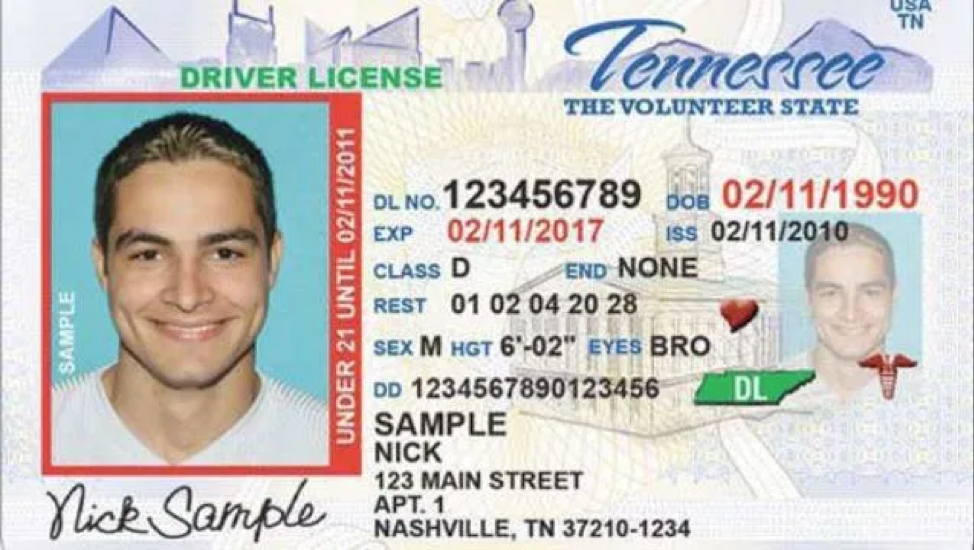
As of May 5, 2025, however, several important changes were made in the law. The Tennessee Legislature amended Tennessee Code Annotated Section 55–10–407 to require a suspension of the suspect’s Tennessee driver’s license for a period of 18 months, six months more than if they are ultimately convicted of DUI. Moreover, if a blood sample is obtained through the use of a search warrant after the operator refused, the suspect’s driver’s license may still be suspended for 18 months. It is also important to recognize that the 18 months suspension for refusing may be in addition to the 12-month suspension upon conviction of DUI. Thus, the defendant could lose their driver’s license for a period of 2.5 years.
This code section was additionally amended to allow an oral fluid test to be administered in certain circumstances. These circumstances include, but are not limited to, the operator’s consent, a search warrant, or without the consent of the operator when exigent circumstances exist. Oral fluids (saliva), generally taken with a cotton swab from inside the mouth, maybe be used at the roadside to test for certain drugs. Most commonly, these drugs include marijuana, cocaine, methamphetamine, amphetamines, opioids, and benzodiazepines. If a positive result is obtained at the initial screening, the sample is forwarded to a laboratory for a more detailed analysis.
About the Author: Steven Oberman has been licensed in Tennessee since 1980, and successfully defended over 2,500 DUI defendants. Steve was the first lawyer in Tennessee to be Board Certified as a DUI Defense Specialist by the National College for DUI Defense, Inc. (NCDD). Among the many honors bestowed upon him, Steve has served as Dean of the NCDD and currently serves as chair of the National Association of Criminal Defense Lawyers DUI Committee.
Steve is the author of DUI: The Crime & Consequences in Tennessee, updated annually since 1991 (Thomson-West), and co-author with Lawrence Taylor (1942 – 2023) of the national treatise, Drunk Driving Defense, 9th edition (Wolters Kluwer/Aspen). Steve has served as an adjunct professor at the University of Tennessee Law School since 1993 and has received a number of prestigious awards for his faculty contributions.
He is a popular international speaker, having spoken at legal seminars in 30 states, the District of Columbia and 12 foreign countries. After being named a Fulbright Scholar, Steve was honored to teach as a Visiting Professor at the University of Latvia Faculty of Law (Law School) in the capital city of Riga, Latvia for a semester during 2019. In 2023, Steve accepted an offer to teach for a semester as a Visiting Professor at Eötvös Loránd University Faculty of Law in Budapest, Hungary. Steve was designated a Fulbright Scholar for a second time and taught American Criminal Law and American Trial Advocacy at The University of Ljubljana Faculty of Law in the capital city of Ljubljana, Slovenia for the 2024 spring semester. Since then, Steve taught American Trial Advocacy to Masters Students in Criminal and Criminal Procedure Law for the Winter Semester in 2025 at the Universidad Carlos III de Madrid Faculty of Law in Madrid, Spain and at The University of Gdańsk Faculty of Law in Poland during the winter semester of 2026. If you would like to contact the author, please visit his website at www.tndui.com. ↩︎
